The Eysenck Personality Questionnaire (EPQ) was compiled by British psychology professor Eysenck and his wife. It was developed based on the 'Eysenck Personality Questionnaire' (EH). It began to be formulated in the late 1940s, first published in 1952, and officially named in 1975. There are two formats: Adult questionnaire and Children questionnaire. EPQ consists of four scales: P, E, N, and L, w...
Enneagram/Ninehouse is an ancient science with a history of more than 2,000 years. It divides people's personality into nine types according to their habitual thinking patterns, emotional reactions and behavioral habits: The Reformer: Perfect, Improvement, Defending Principle, Order Ambassador The Helper: Those who achieve others, help others, fraternal and loving ambassadors The Achiever: Achieve...
Welcome to the Enneagram Personality Test! This is a psychological theory that describes human personality traits and behavior patterns. According to the Enneagram Personality Theory, each person is classified as nine different personality types, each with its unique characteristics, motivations, and behavior patterns. This test is a free beta version of the Enneagram Personality Test Questionnair...
Welcome to the Asperger Autism (Autism) Self-rated Scale RAADS-14 Online Test! Have you ever wondered if certain behavioral patterns in yourself or around you are related to autism spectrum characteristics? The Ritvo Autism/Asperger Diagnostic Scale-14 (RAADS-14) is a fast and reliable autism (autism) screening tool designed for adults to help you explore these possibilities initially. What is RAA...
In this world full of uncertainty, the attitudes of pessimists and optimists have had a profound impact on their life trajectory. Pessimists may say they are always right because they always foresee the worst; while optimists move forward forever because they believe that the future is full of possibilities. Both attitudes have their value, but when facing challenges in life, an optimistic attitud...
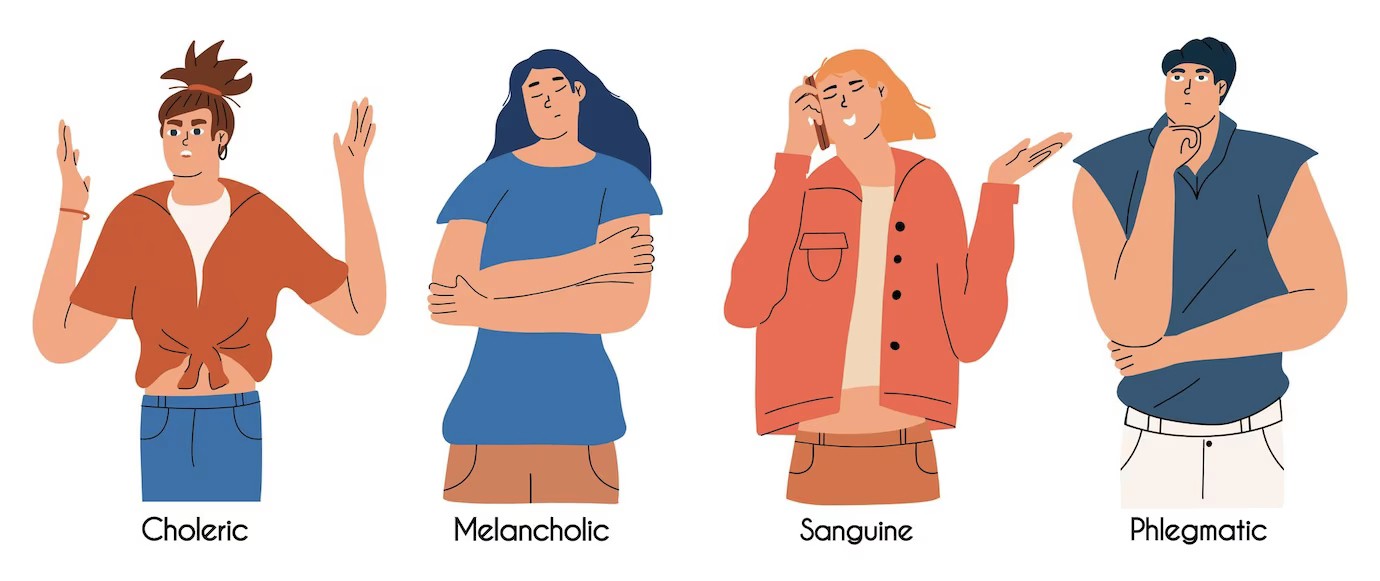
Which of the four temperament types in psychology do you belong to? Temperament refers to the individual's relatively stable psychological characteristics and behavioral tendencies, reflecting the individual's typical response method to emotions, emotions and behaviors. It includes the speed, intensity, stability and direction of psychological activities. Specifically, temperament includes the fol...
The Test Anxiety Scale (TAS), compiled and completed by Professor Irwin G. Sarason, a famous clinical psychologist at the Department of Psychology at the University of Washington, USA, in 1978. It is one of the most famous test anxiety scales widely used internationally. It aims to evaluate the level of anxiety an individual experiences in an exam or test situation. Exam anxiety refers to the anxi...
Stress refers to the emotional reactions of physical and mental tension and anxiety that people feel when facing challenges or needs. Stress can come from various factors, such as work, academics, interpersonal relationships, health, and economics. Moderate stress can stimulate people's enthusiasm and creativity, but excessive stress can have adverse physical and psychological effects. In psycholo...
The Eysenck's Emotional Stability Scale (EES) is a psychometric tool developed by British psychologist Hans Eysenck to evaluate an individual's emotional stability level. Eisenke is a professor of psychology at the University of London, England. He is one of the most famous psychologists in the present day and has compiled a variety of psychological tests. Emotional stability tests can be used to ...
Success and satisfaction in a career often stems from our deep understanding of our career goals and motivations. Edgar H. Schein, a famous American career guidance expert and professor at the Sloan School of Business at MIT, proposed the Career Anchors theory through 12 years of research, providing a strong framework for personal career planning. Through a long-term follow-up study of 44 MBA grad...